
Photo courtesy of Pedro Freitas
I love a good story about mythological creatures. But mythological plants don’t get nearly as much attention.
Remember the scene in Harry Potter and the Chamber of Secrets when they have to repot the crying mandrake plants? That particular tale has been circulating since long before J.K. Rowling picked up the myth.
Take a look at the story of the mandrake, as well as several other weird plants from mythology…
Hungry grass
Hungry grass is a plant from Irish mythology. There are two stories about the origin of the grass. One says that regular grass can be cursed by the presence of a corpse that was not granted Last Rites. The other version tells that hungry grass was planted by malicious faeries.
Either way, the legend agrees that any person who walks on the cursed grass will be doomed to a lifetime of insatiable hunger.
Fern flower
The story of the fern flower, or Chervona Ruta, comes from Slavic mythology. It is said to be a magical plant that blooms only on the night of the summer solstice. If you find it and pick it, you will receive good luck.
The stories say that those who have found this flower have received things like wealth, fame, and even the ability to understand what animals are saying.
Beware, though. The myth also says the fern flower, though not evil itself, is guarded by evil spirits who exact a price on the finder.
Vegetable lamb
The vegetable lamb may actually be a misunderstood cotton plant. However, the tale of this Central Asian plant that grew fully grown sheep instead of flowers was told across Western Europe throughout the Middle Ages and up to the 17th century.

Cotton was relatively uncommon in Europe at this time, and Europeans spread the tale that these sheep flowers were used to make clothes.
Madagascar tree
The Madagascar tree is one of the scarier plants in mythology. A 19th century German explorer, Carl Liche, made up a story that he had seen a religious ceremony in Madagascar where a tribe sacrificed a man by feeding him to a man-eating tree. The hoax of its existence continued to spread, and the myth of man-eating plants became common in science fiction and adventure stories in the 20th century.
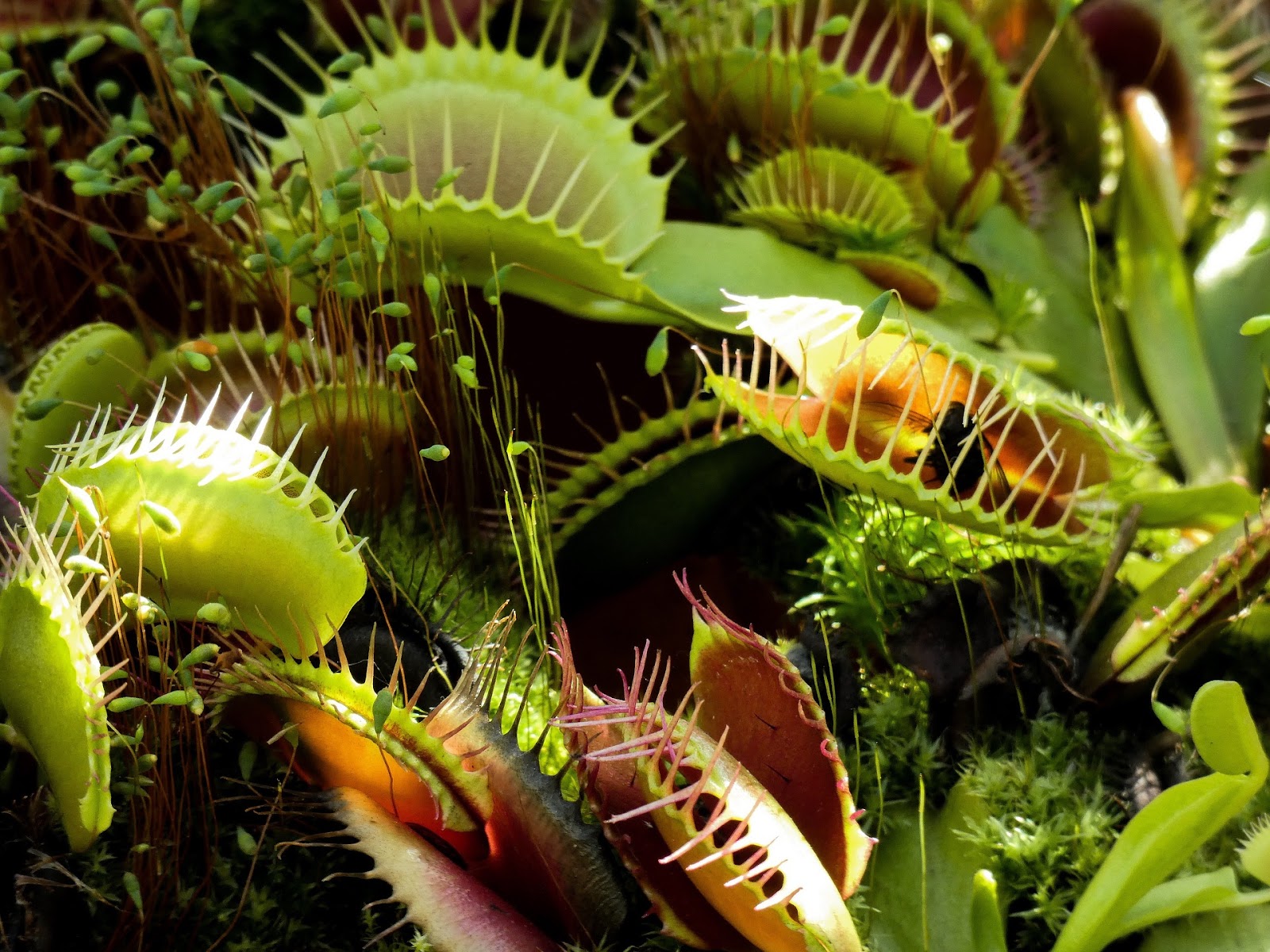
The physical description of the tree actually sounds a lot like a giant Venus fly trap with tentacles rather than branches. Of course, real fly trap plants can’t do so much as bite a finger. Sometimes we carry them for sale at Indoor Cultivator, and we haven’t lost a customer to them yet.
Mandrake root
Mandrake actually is a real plant. But it has quite a mythology built up around it. It features in stories of witchcraft going back thousands of years. And it took a clever magic user to gain access to its power. That’s because according to the myth, the mandrake root screams when someone digs it up, and its scream kills anyone within hearing range.
If you’re looking for interesting plants to spice up your own garden tales, we often carry exotic plant species in our store in Fairview Heights, IL. Recently, we’ve had Voodoo lilies, Life Saver plants, and pink quills. Find their photos on our Instagram.
Frequently Asked Questions
What are the strangest plants in mythology?
Mythological plants include the Mandrake (said to scream when pulled from the ground), the Lotus (which caused memory loss in Greek mythology), the Upas Tree (supposedly killed anything that came near it), and the Barnacle Tree (believed to grow geese from its branches). Many of these myths are based on real plants with exaggerated properties.
Are any mythological plants real?
Yes. Mandrake is a real plant (Mandragora) with forked roots that resemble a human form. The Lotus may refer to several real plants with sedative properties. Wolfsbane (aconite), associated with werewolf mythology, is a genuinely toxic real plant. Many myths originated from observations of real botanical properties.
Frequently Asked Questions
What mythological plants are real?
Many plants from mythology have real-world counterparts. Mandrakes (from Harry Potter and European folklore) are real plants with forked roots. Lotus flowers (from Greek mythology) exist as water lilies. Even the 'Tree of Life' concept appears across cultures and maps to real species like baobabs and figs.
Are there any truly strange plants?
Absolutely. Corpse flowers (titan arum) smell like rotting flesh, Venus flytraps actively catch insects, Welwitschia plants can live 1,000+ years with only two leaves, and Lithops (living stones) disguise themselves as rocks. Nature's real plants are often stranger than fiction.